Christmas Pavlova Recipe
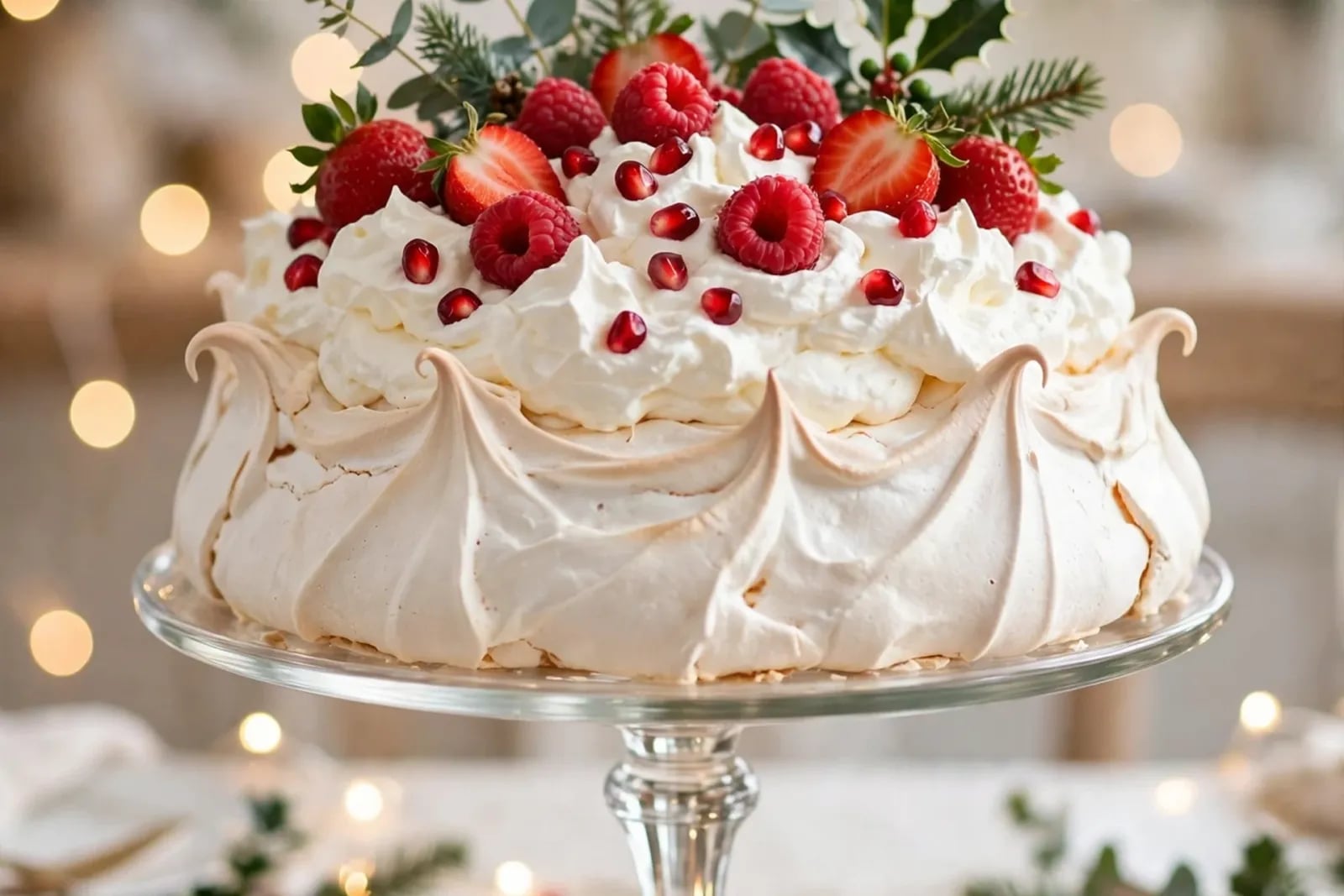
Christmas pavlova is the show stopping centrepiece every festive table needs: a crisp meringue shell with a soft marshmallowy centre, piled with whipped cream, fresh berries and a drizzle of passion fruit. Light, bright and beautiful. It is light enough for after a big Christmas dinner.
 Desserts
This Christmas Pavlova Recipe makes the dessert that steals the show at every festive table: a tall, crisp meringue shell with a soft, marshmallowy centre, crowned with clouds of whipped cream and jewel bright berries. It looks like it took all day, but the meringue itself is simple, and the red and green topping makes it unmistakably Christmas. Slice it at the table and watch it disappear.
For more festive desserts, try our Pumpkin Basque Cheesecake, our Chocolate Chess Pie and our Cranberry Pear Crumble Bars.
What Makes This Christmas Pavlova So Good
The contrast is everything. The outside bakes into a crisp, delicate shell that shatters gently under the spoon, while the inside stays soft and marshmallowy, almost like a cloud. That contrast is what a pavlova is for, and it comes from a slow bake followed by a long, patient cool down inside the oven.
The topping keeps it fresh and light after a heavy Christmas dinner. Whipped cream, tart raspberries, sweet pomegranate seeds and passion fruit pulp cut through the sweetness of the meringue.
The Key Ingredients
A short list of simple ingredients builds the whole dish.
The Egg Whites
Room temperature egg whites whip up higher and more stable than cold ones, so take the eggs out of the fridge an hour before you start. Make sure the bowl is spotlessly clean and free of grease, because even a trace of fat stops the whites from whipping. Any yolk in the whites will do the same, so separate them carefully.
The Sugar and Cornflour
Caster sugar dissolves more easily than granulated sugar, which matters for a smooth meringue. Add it a spoonful at a time and beat well between additions, until the meringue is thick, glossy and smooth. A little cornflour and white vinegar folded in at the end create the soft marshmallowy centre.
The Whipped Cream
Heavy cream whipped to soft peaks is the classic topping, and it should be barely sweetened so it balances the meringue. Whip it just until it holds its shape, because over whipped cream turns grainy and buttery. A spoonful of vanilla and a little icing sugar are all it needs.
The Berries and Fruit
Fresh raspberries, strawberries and pomegranate seeds give the pavlova its Christmas colours and its tart, juicy contrast. Passion fruit pulp drizzled over the top adds a tropical sharpness that lifts the whole dessert. Use the best fruit you can find, because the topping is half the dish.
How to Make Christmas Pavlova
The method is mostly patience: whip slowly, bake low, and cool in the oven.
- Prepare the tray: line a baking sheet with parchment and draw a 9 inch circle as a guide.
- Whip the whites: beat the egg whites with the cream of tartar until soft peaks form.
- Add the sugar: add the caster sugar a spoonful at a time, beating well until thick and glossy.
- Fold in the extras: fold in the cornflour, vinegar and vanilla gently.
- Shape the meringue: spoon onto the circle and shape into a nest with a dip in the centre.
- Bake low and slow: bake at 250F for 1 hour and 15 minutes until crisp outside.
- Cool in the oven: turn the oven off and leave the pavlova inside for at least 2 hours.
- Top and serve: pile on the whipped cream and fruit just before serving.
Mistakes to Avoid
Adding the Sugar Too Fast
Sugar dumped in all at once will not dissolve, and the meringue will weep syrup in the oven and turn grainy. Add it a spoonful at a time and beat well between additions, and rub a little meringue between your fingers to check that it feels smooth, not gritty. Slow sugar makes a stable meringue.
Opening the Oven Door
A rush of cool air while the pavlova bakes will make it crack and collapse. Keep the door shut for the whole bake and the whole cool down, and let the meringue dry out slowly in the cooling oven. Cracks are normal and can be covered with cream, but a collapsed pavlova cannot be fixed.
Topping It Too Early
Cream sitting on a meringue for hours will soften the crisp shell into a soggy one. Always top the pavlova just before serving, within an hour at most. The bare meringue keeps for days, so bake ahead and decorate at the last minute.
What to Serve with Christmas Pavlova
Pavlova is the dessert itself, but a few extras make the table feel complete:
- Extra fresh berries, piled in a bowl beside it
- Passion fruit pulp, for guests to drizzle over their slice
- A glass of dessert wine, for the grown ups at the table
- Hot coffee or tea, to finish the meal
Make It Your Own
The recipe welcomes small changes. Swirl raspberry jam through the meringue before baking for a marbled effect, swap the berries for sliced kiwi and mango, or add lemon zest to the cream for brightness. For individual servings, pipe small nests and bake for 45 minutes.
Make This Christmas Pavlova Today
Crisp meringue, soft marshmallow centre and jewel bright berries make this the Christmas dessert everyone photographs. Whip it slowly, bake it low, and top it at the last minute. Browse more of our Desserts recipes for more festive centrepieces.
Recipe card
Christmas Pavlova Recipe
- Prep
- 25 mins
- Cook
- 1 hr 15 mins
- Total
- 3 hrs 40 mins
- Serves
- 10
- Course
- Dessert
- Cuisine
- Australian
- Calories
- 310 kcal
Ingredients
0/13 ready · tap to tick off
Equipment
- Mixing bowl
- electric mixer
- baking sheet
- parchment paper
- spatula
Method
Tap a step when it’s done.
Nutrition
310 kcal
Calories
4 g
Protein
42 g
Carbs
14 g
Total Fat
2 g
Fibre
39 g
Sugar
55 mg
Sodium
* Per serving. Values are estimates.
Notes
- Use room temperature egg whites for the best volume.
- The bowl must be completely clean and grease free.
- Cool the pavlova in the oven for a crisp shell.
- Top the pavlova just before serving so it stays crisp.
- The bare meringue keeps for up to 3 days in an airtight tin.
Tips for success
- Add the sugar slowly so it dissolves fully.
- Rub the meringue between your fingers to check for grittiness.
- Do not open the oven door while it bakes or cools.
- Whip the cream to soft peaks only, not stiff.
- Use the freshest berries you can find.
- Serve with a hot wet knife for clean slices.