Pad Thai Recipe
This Pad Thai Recipe is smoky, tangy and absolutely packed with flavor. Chewy flat rice noodles stir fried at high heat with juicy prawns, scrambled egg, crunchy bean sprouts and spring onions in a deeply savory tamarind, fish sauce and palm sugar sauce. Furthermore, finished with crushed peanuts, fresh lime and chili flakes. Moreover, this Pad Thai Recipe is ready in just 20 minutes and is one of the most popular quick cooking recipes and summer dinner ideas in the world.
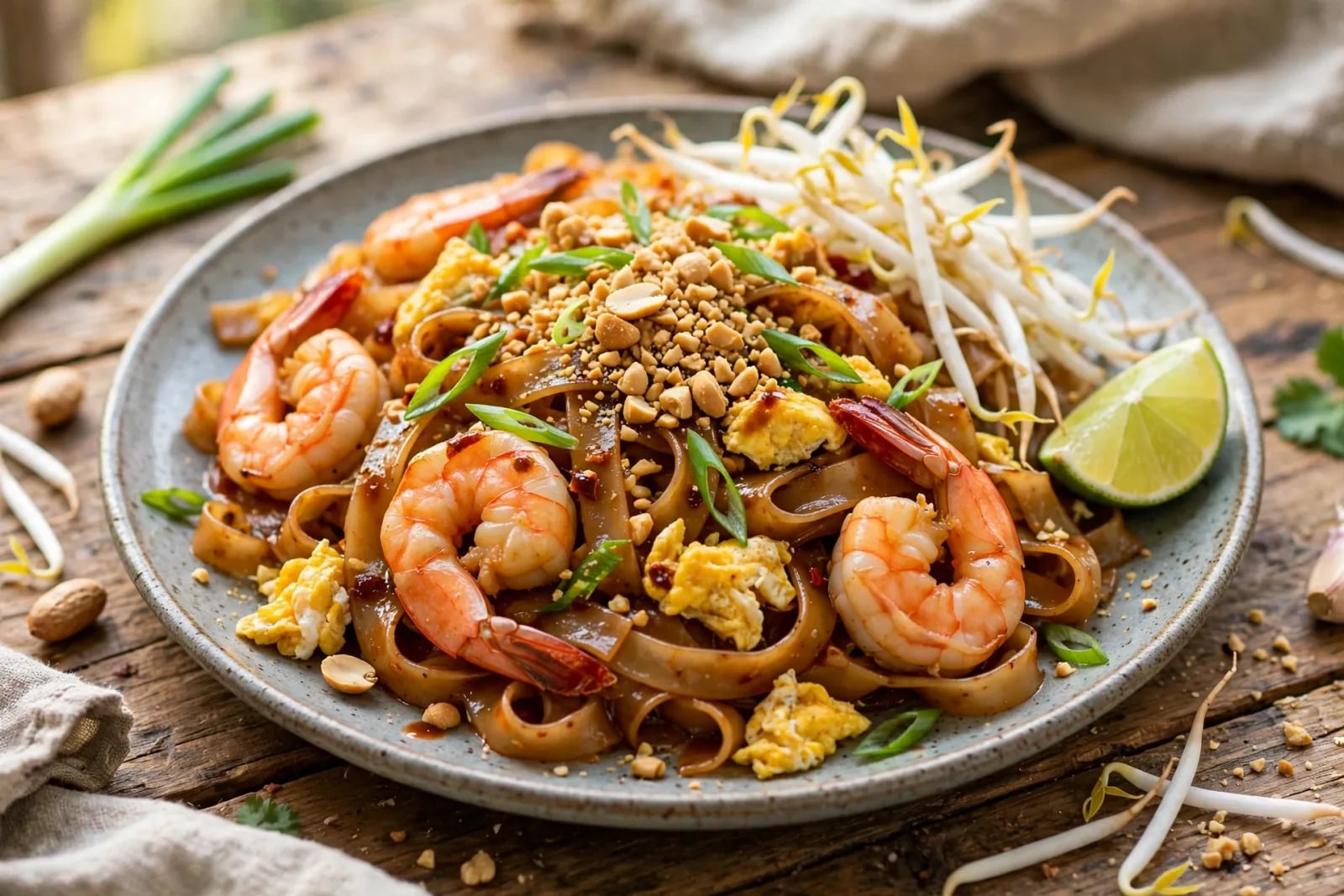 Main Course
This Pad Thai Recipe is Thailand's most famous street food dish and one of the most beloved noodle recipes on the entire planet. The intoxicating smell of noodles hitting a screaming hot wok. The characteristic smoky char that develops in seconds at high heat. Furthermore, the extraordinary balance of tangy, sweet, salty and savory in every forkful that makes this dish utterly addictive.
Moreover, this Pad Thai Recipe is one of the most saved and shared quick cooking recipes on Pinterest every single summer. For more wonderful Asian noodle and main course recipes, also explore our Shrimp Fried Rice Recipe, our aromatic Tom Yum Soup Recipe and our full Main Course collection.
The Secret to Authentic Pad Thai
The single most important factor in a great Pad Thai Recipe is high heat. Furthermore, a screaming hot wok or pan creates the characteristic smoky flavor that the Thai call wok hei or breath of the wok. Consequently, the biggest mistake home cooks make is using insufficient heat and producing steamed, soggy noodles instead of smoky, charred ones.
Cook in Small Batches
Never cook pad thai for more than 2 people at a time in a single pan. Furthermore, overcrowding drops the temperature dramatically. Consequently, the ingredients steam rather than fry and the essential smoky char is completely lost. For 4 servings, cook in two separate batches and serve immediately.
Why You Will Love This Pad Thai Recipe Ready in just 20 minutes · Authentic smoky wok flavor · Serves 2 (cook in batches for 4) · Better than any takeaway · Perfect summer dinner and quick cooking recipe · The most saved Asian recipe on PinterestThe Pad Thai Sauce
The sauce is the soul of this Pad Thai Recipe. Furthermore, the three ingredient combination of tamarind paste, fish sauce and palm sugar creates the most perfectly balanced sweet, sour and savory flavor. Consequently, getting these three components right is the key to an authentic and extraordinary result.
Tamarind Paste
Tamarind is the most essential and irreplaceable ingredient in pad thai. Moreover, it provides the distinctive sour note that defines the dish. Additionally, tamarind paste or concentrate is widely available in supermarkets and Asian grocery stores. Consequently, there is no acceptable substitute for tamarind in a truly authentic pad thai.
Palm Sugar vs Regular Sugar
Palm sugar has a more complex, slightly caramel like sweetness compared to white sugar. Furthermore, it is the traditional sweetener in Thai cooking and adds a subtle depth that white sugar cannot provide. On the other hand, light brown sugar is an excellent and easily available substitute. Consequently, never use white sugar as it produces a flat, one dimensional sweetness.
The Noodles for This Pad Thai Recipe
Flat dried rice noodles approximately 3mm wide are the authentic choice for pad thai. Furthermore, soaking them in cold water for 30 minutes before cooking is essential. Consequently, properly soaked noodles cook instantly in the hot wok rather than clumping and breaking.
The Right Noodle Texture
The noodles should be fully soaked and flexible but still slightly firm before they go into the wok. Moreover, over soaked noodles become mushy and fall apart during stir frying. Consequently, soaking in cold water rather than hot water prevents over softening and produces the perfect chewy texture in the finished dish.
How to Make This Pad Thai Recipe
The method is fast and exciting. First, make the sauce and soak the noodles. Then stir fry the protein. Next, add noodles and sauce. Scramble the egg through. Finally, add bean sprouts and garnish. The full method is in the recipe card below.
What to Serve with Pad Thai
Pad Thai is a complete and deeply satisfying meal. However, these accompaniments create a full Thai inspired spread:
Perfect Pairings
- Our fiery Tom Yum Soup Recipe as a starter for a complete Thai feast
- A simple Thai cucumber salad with rice wine vinegar, chili and sesame alongside
- Fresh mango slices alongside for a cooling and refreshing contrast to the savory noodles
- A cold Thai iced tea or our vibrant Mango Lassi as the perfect cooling drink pairing
- Extra lime wedges, crushed peanuts, chili flakes and fish sauce on the table for everyone to customize
Easy Variations for This Pad Thai Recipe
Try These Trending TwistsChicken Pad Thai — Replace prawns with thinly sliced chicken breast. Furthermore, the lighter flavor of chicken produces a more delicate version that is equally popular on Pinterest right now.Tofu Pad Thai — Replace prawns with firm tofu pressed dry and cut into cubes. Moreover, fry the tofu separately until golden before adding to the noodles for the best texture.
Pad Thai with Crab — Add fresh or frozen white crab meat alongside the prawns. Furthermore, the sweet delicacy of crab against the tamarind sauce creates an extraordinarily luxurious version.
Spicy Pad Thai — Double the chili flakes in the sauce and add a tablespoon of sriracha. Additionally, serve with extra fresh bird eye chili sliced on the side for a fiery version.
Pad Thai Omelette — Wrap the finished pad thai in a thin omelette. Consequently, this classic Thai street food serving style called pad thai hor kai creates an impressive and theatrical presentation.
Make This Pad Thai Recipe Tonight
In conclusion, this Pad Thai Recipe is the most authentic, smoky and deeply satisfying quick cooking recipe you can make at home in just 20 minutes. Therefore, whether it is a summer dinner, a quick weeknight meal or an impressive dish for guests, this recipe always delivers extraordinary results. Browse more of our wonderful Main Course recipes and share your results in the comments below!
Recipe card
Pad Thai Recipe
Chewy rice noodles stir fried with prawns, egg and bean sprouts in a smoky tamarind sauce. Topped with crushed peanuts, lime and chili. Ready in 20 minutes.
- Prep
- 10 mins
- Cook
- 10 mins
- Total
- 20 mins
- Serves
- 2 People
- Course
- Main Course
- Cuisine
- Thai
- Calories
- 520 kcal
Ingredients
0/18 ready · tap to tick off
The Noodles
The Pad Thai Sauce
The Stir Fry
The Garnish Table
Equipment
- Large wok or heavy frying pan
- Highest possible heat source
- Wok spatula or large wooden spoon
- Bowl for soaking noodles
- Warm plates for serving
Method
Tap a step when it’s done.
Nutrition
Per serving · based on 2 portions with peanuts
520
Calories
32g
Protein
58g
Carbs
18g
Total Fat
3g
Sat. Fat
3g
Fibre
12g
Sugar
1200mg
Sodium
220mg
Cholesterol
* Nutritional values are estimates per serving. Tofu version reduces cholesterol significantly and increases plant protein. Omitting peanuts reduces fat by approximately 6g per serving.
Notes
- Always cook pad thai in batches of 2 servings maximum. This is the most critical rule in this recipe. Furthermore, overcrowding a wok drops the temperature so severely that the noodles steam and clump rather than frying with the essential smoky char. Consequently, for 4 people always cook two separate batches and serve immediately after each.
- Soak noodles in cold water not hot. Cold water soaking produces flexible but still firm noodles that finish cooking perfectly in the hot wok. Furthermore, hot water soaking makes the noodles too soft before they even reach the pan. Consequently, they break apart and become mushy during stir frying.
- Use tamarind paste not lemon juice. Lemon juice is sometimes suggested as a tamarind substitute but produces a completely different and inferior result. Furthermore, tamarind has a unique fruity, deep sour flavor that citrus cannot replicate. Consequently, tamarind paste is essential for authentic pad thai and is widely available.
- This recipe serves 2. To serve 4, make two complete separate batches one after the other. Furthermore, keep the first batch warm in a low oven while cooking the second. Consequently, both batches are served at approximately the same time.
- Pad thai does not reheat well. The noodles continue absorbing liquid and clump together when stored. Furthermore, the bean sprouts lose their crunch completely. Consequently, pad thai is always best eaten immediately after cooking and is not suitable for meal prep or leftovers.
Tips for success
- Use the highest heat available. This is the single most important tip for great pad thai. Furthermore, a gas burner on maximum produces the best results. On an electric hob, use the largest ring on maximum and preheat the wok for longer. Consequently, the smoky wok hei flavor that defines authentic pad thai is only achievable at very high temperatures.
- Pre-mix the sauce before starting. Once the wok is hot everything moves very fast. Furthermore, reaching for individual sauce bottles while the noodles are in the wok results in overcooked ingredients and lost timing. Consequently, mixing the sauce and having all ingredients measured and within arm's reach before heating the wok is non negotiable.
- Add bean sprouts at the very end. Bean sprouts wilt and become soggy within 60 seconds of high heat. Furthermore, wilted bean sprouts lose the satisfying crunch that is essential to the texture of great pad thai. Consequently, adding them in the final 30 seconds of cooking preserves their crunch perfectly.
- Squeeze lime over the noodles at the table not in the wok. Lime juice added to a hot wok loses its fresh citrus brightness instantly. Moreover, individual diners can squeeze more or less to their own preference. Consequently, always serve lime wedges separately at the table.
- Set out a full garnish table. The authentic pad thai experience includes a small plate of chili flakes, extra fish sauce, extra sugar and extra lime alongside the peanuts. Furthermore, each diner adjusting their own bowl to their taste preferences is a fundamental part of how pad thai is eaten in Thailand. Consequently, the garnish table is not optional but essential to the full experience.