Beef Stew Recipe
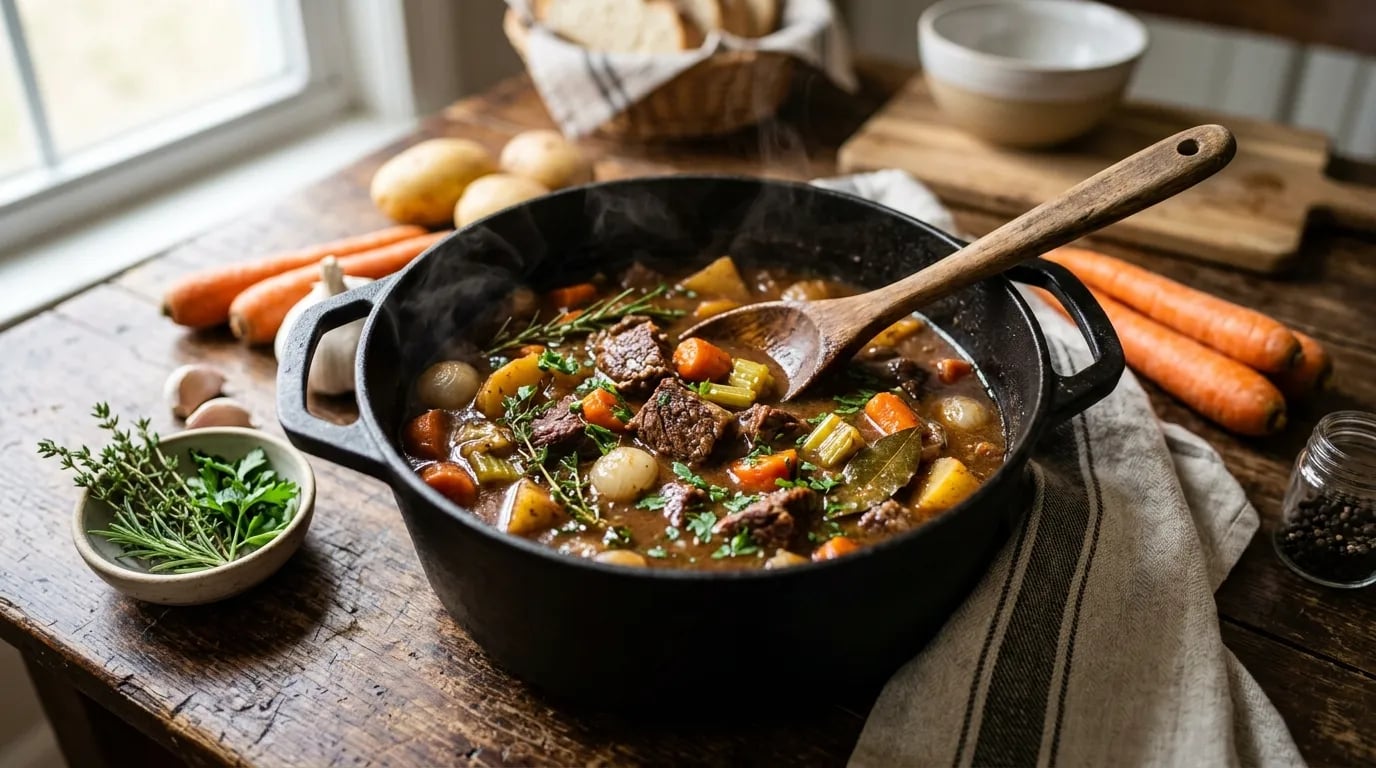
This Beef Stew Recipe is the ultimate one pot comfort meal. Melt in the mouth chunks of beef slow cooked with chunky vegetables in a rich, deep and velvety gravy. Furthermore, every bite is packed with bold, savory flavor that only comes from low and slow cooking. Perfect for cozy weekends and cold weather dinners.
 Soup and Stew
A great Beef Stew Recipe is one of the most satisfying things you can cook. The beef becomes meltingly tender. The gravy turns thick, rich and deeply flavored. Moreover, the vegetables soak up all that incredible savory liquid and become perfectly soft and delicious. Furthermore, this Beef Stew Recipe is a true one pot meal that feeds the whole family with minimal effort and maximum reward.
Additionally, beef stew is one of the best make ahead meals you will ever cook. It tastes even better reheated the next day. For more comforting soups and stews, explore our Tomato Soup Recipe, our hearty Chicken Noodle Soup Recipe and our full Soup and Stew collection.
What Makes This Beef Stew Recipe So Rich
The secret behind a great Beef Stew Recipe is patience. There are two key techniques that create extraordinary depth of flavor. First, searing the beef properly before adding any liquid. Second, using wine or beer to deglaze the pan before adding the stock.
Searing creates the Maillard reaction on the surface of the beef. As a result, hundreds of new flavor compounds form on the meat. These compounds dissolve into the gravy during the long slow simmer. Furthermore, deglazing lifts every caramelized bit from the bottom of the pan. Consequently, nothing is wasted and everything ends up in the sauce.
The Best Cut of Beef for Beef Stew Recipe
Not all beef cuts work equally well in a Beef Stew Recipe. Therefore, choosing the right cut is essential. Here are the best options:
- Chuck steak — The gold standard for beef stew. It has the perfect balance of meat and marbling fat. Moreover, it becomes incredibly tender and flavorful after a long slow braise.
- Brisket — Very rich and slightly fattier than chuck. It produces a deeply flavorful stew with a more pronounced beefy taste. Furthermore, it holds together beautifully during long cooking.
- Short rib meat — Luxuriously rich and deeply marbled. It creates a spectacularly indulgent stew. Additionally, it is the most premium option for a special occasion Beef Stew Recipe.
- Stewing beef — Pre cut cubes sold specifically for stews. Convenient and affordable. However, quality varies so buy from a good butcher when possible.
Why Low and Slow Cooking Matters
Low and slow cooking is the foundation of a great Beef Stew Recipe. Tough cuts like chuck contain a lot of collagen. At high temperatures collagen contracts and toughens. However, at low sustained heat it breaks down over time into gelatin. This gelatin dissolves into the braising liquid. As a result, the gravy becomes naturally thick, silky and rich without needing heavy thickening agents.
Furthermore, the beef itself becomes meltingly tender. After 1.5 to 2 hours of gentle simmering, the meat breaks apart with the lightest pressure from a fork. On the other hand, rushing the cooking at high heat produces tough, chewy beef and a thin, watery sauce.
The Role of Wine in Beef Stew Recipe
A generous pour of red wine dramatically improves a Beef Stew Recipe. The alcohol carries flavor compounds that are not water soluble. Consequently, it extracts flavors from the beef and vegetables that stock alone cannot reach. Moreover, as the wine reduces during cooking, it adds acidity, depth and a subtle fruity complexity to the finished gravy.
Use a full bodied red wine such as Cabernet Sauvignon or Merlot. Additionally, if you prefer not to use wine, substitute with extra beef stock and a tablespoon of balsamic vinegar for a similar depth and acidity.
How to Make This Beef Stew Recipe
The process has four stages. First, sear the beef in batches until deeply browned. Then, saute the aromatics and deglaze with wine. Next, add the stock and vegetables and simmer low and slow. Finally, thicken the gravy and season to taste. The full step by step method is in the recipe card below.
What to Serve with Beef Stew
This Beef Stew Recipe is a complete meal on its own. However, these accompaniments make it even more satisfying and special:
- Creamy mashed potatoes — the most classic pairing that soaks up every drop of the rich gravy
- Thick crusty sourdough bread or our golden Garlic Bread Bites for dunking
- Buttered egg noodles tossed with parsley for a hearty and satisfying base
- Steamed white rice for a lighter and more neutral accompaniment
- A crisp Classic Caesar Salad on the side for a fresh, bright contrast
How to Store and Reheat Beef Stew
This Beef Stew Recipe stores exceptionally well. Keep it in an airtight container in the refrigerator for up to 4 days. The flavor deepens and improves significantly after the first day. Therefore, making it a day ahead is highly recommended.
Freezing Beef Stew
Beef stew freezes beautifully for up to 3 months. Allow it to cool completely before transferring to freezer safe containers. Moreover, portion it individually for convenient single serving meals. Thaw overnight in the refrigerator. Reheat gently on the stovetop over low heat, adding a splash of beef stock to loosen the gravy if needed.
Easy Variations for This Beef Stew RecipeGuinness Beef Stew — Replace the red wine with a can of Guinness stout for a wonderfully dark, malty and deeply Irish inspired variation with incredible richness.Slow Cooker Version — Complete steps 1 through 3 on the stovetop. Then transfer everything to a slow cooker. Cook on low for 7 to 8 hours or on high for 4 to 5 hours for the most tender beef imaginable.
Oven Braised — After deglazing, transfer to a covered Dutch oven. Cook in a preheated oven at 160°C (325°F) for 2 hours. As a result, the heat surrounds the pot evenly and produces a beautifully consistent braise.
Herb Garden Version — Add fresh rosemary, thyme and parsley at the start of cooking. Furthermore, stir in a handful of fresh parsley just before serving for a bright, herb forward finish.
Tomato Rich Version — Add a 400g tin of crushed tomatoes along with the stock for a richer, more Italian style beef stew with a deeper color and a slightly sweeter, more acidic gravy.
Make This Beef Stew Recipe This Weekend
In conclusion, this Beef Stew Recipe is one of the most deeply satisfying and rewarding recipes on the entire TastelyBites website. Therefore, whether you are cooking for a cozy family dinner or preparing meals ahead for the week, this recipe always delivers extraordinary results. Browse more of our delicious Soup and Stew recipes and let us know how yours turned out in the comments below!
Recipe card
Beef Stew Recipe
Melt in the mouth beef, chunky vegetables and a rich velvety gravy in one pot. The ultimate hearty comfort meal perfect for any occasion.
- Prep
- 20 mins
- Cook
- 1 hr 50 mins
- Rest
- 10 mins
- Total
- 2 hrs 15 mins
- Serves
- 5 to 6
- Course
- Main Dish
- Cuisine
- American
- Calories
- 480 kcal
Ingredients
0/18 ready · tap to tick off
The Beef
The Aromatics
The Liquid
The Vegetables
Equipment
- Large Dutch oven or heavy casserole
- Sharp knife and cutting board
- Wooden spoon or spatula
- Tongs for searing beef
- Measuring spoons and jug
- Large bowl for flouring beef
Method
Tap a step when it’s done.
Nutrition
Per serving · 1 of 5 portions, without accompaniments
480
Calories
42g
Protein
28g
Carbs
18g
Total Fat
6g
Sat. Fat
5g
Fibre
7g
Sugar
680mg
Sodium
110mg
Cholesterol
* Nutritional values are estimates per serving based on 5 portions without accompaniments. Serving over mashed potatoes adds approximately 200 kcal per serving. Values vary with different beef cuts.
Notes
- Patting the beef completely dry before flouring and searing is the single most important preparation step. Any moisture on the surface causes the beef to steam in the pan instead of sear. Consequently, you lose all the deep brown crust that makes the gravy so rich.
- Sear the beef in small batches. Adding too many pieces at once drops the pan temperature dramatically. As a result, the beef releases water and steams rather than caramelizing. Take the time to do this properly — it is worth every extra minute.
- Add the potatoes and carrots only after the first hour of simmering. Adding them at the start results in completely disintegrated vegetables by the time the beef is tender. Staggering the addition ensures everything finishes cooking at the same time.
- This Beef Stew Recipe improves dramatically overnight. The flavors meld, deepen and become more harmonious after sitting in the refrigerator. Therefore, making it a day ahead is strongly recommended for the best possible result.
- The stew keeps in the refrigerator for up to 4 days and freezes for up to 3 months. Reheat gently on the stovetop over low heat with a splash of beef stock to loosen the gravy if it has thickened too much during storage.
Tips for success
- Use a heavy bottomed Dutch oven rather than a thin pot. Heavy pots distribute heat evenly. Furthermore, they retain heat during the long simmer and prevent hot spots that can scorch the bottom of the stew.
- Never let the stew boil during the slow cooking phase. A hard boil toughens the beef and makes the gravy cloudy. The liquid should barely tremble with the occasional bubble breaking the surface. This gentle simmer is the key to tender meat and a clear, glossy gravy.
- Taste and season at every stage. Season the beef before searing. Season the aromatics while they cook. Taste the gravy before adding the vegetables. Additionally, taste and adjust one final time just before serving.
- Cut the beef into large cubes of approximately 4 cm. Smaller pieces tend to fall apart completely during the long cooking time. Moreover, larger pieces stay intact and provide satisfying, substantial bites in every spoonful.
- Skim any fat from the surface of the gravy before serving. After long cooking, some fat renders out of the beef and rises to the surface. Removing it produces a cleaner, less greasy and more refined finished dish.
- Rest the stew for 10 minutes before serving. This allows the temperature to drop slightly and the gravy to thicken further. On the other hand, serving immediately from the heat means the gravy is at its thinnest and the beef is at its hottest inside.