Roast Duck with Orange Glaze Recipe
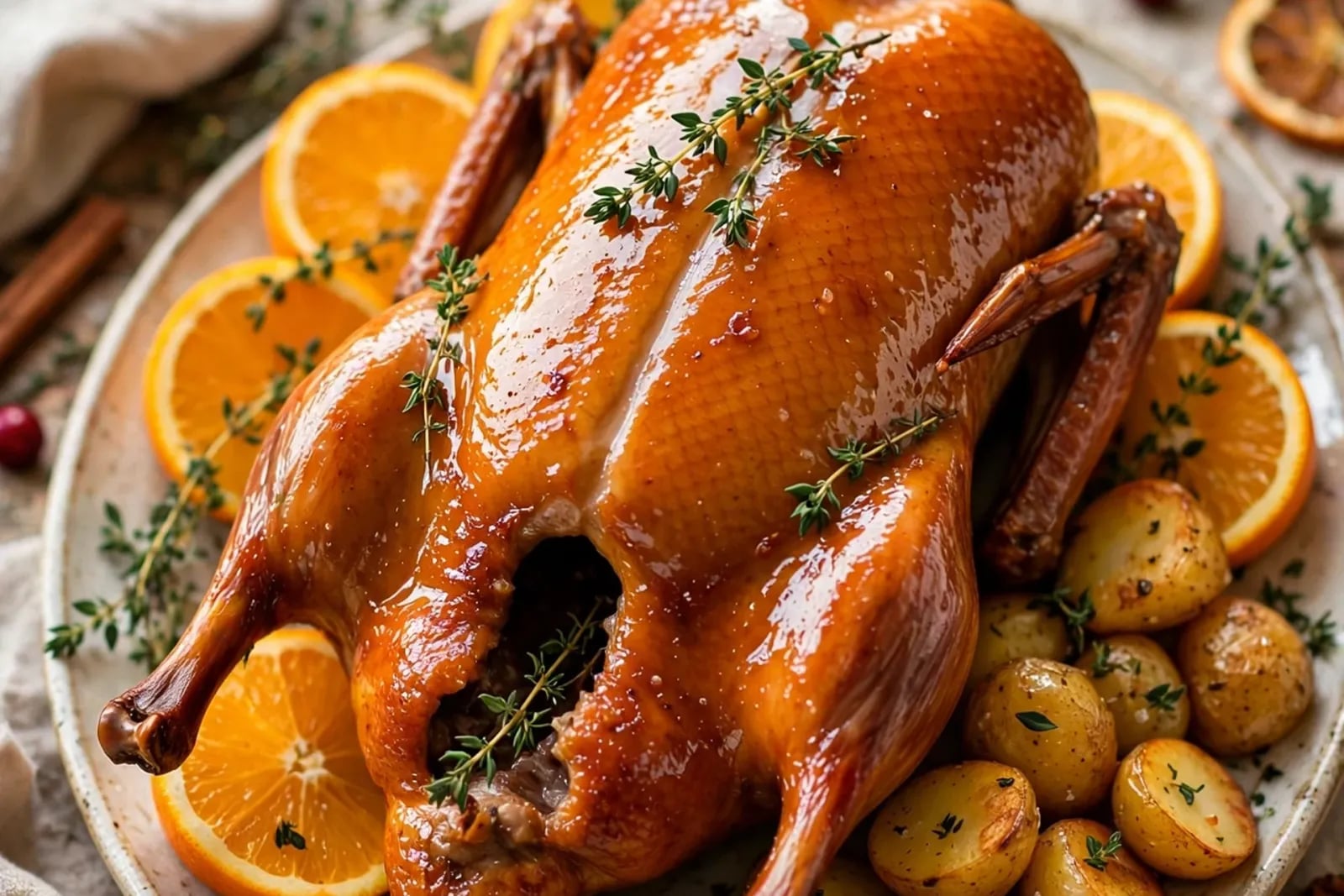
Roast duck with orange glaze is the elegant holiday centrepiece of crisp skinned duck, glossy citrus glaze and rich, savoury meat. It looks restaurant worthy, feeds a special table with ease, and fills the kitchen with the most wonderful festive smell.
 Main Course
This Roast Duck with Orange Glaze is the festive roast that turns a holiday dinner into an occasion. A whole duck is roasted until the skin turns crisp and golden, then brushed with a sticky orange glaze that caramelises in the heat. The meat stays rich and juicy, the citrus cuts through the fat, and every slice feels like a celebration.
For more impressive main course favourites, try our Garlic Herb Prime Rib, our Red Wine Braised Pot Roast and our Beef Stroganoff.
What Makes This Roast Duck So Good
The crisp skin is the star. Scoring the skin and roasting the duck on a rack lets the fat render away slowly, so the skin turns golden and crackling while the meat stays tender. A salt dry brine left overnight draws moisture from the skin, which is the secret to that crispness.
The orange glaze is the other half of the magic. Fresh orange juice, honey and a little soy sauce simmer into a glossy, sticky glaze that balances the rich duck with bright citrus and gentle sweetness. Brushed on in the final minutes, it lacquers the skin without burning.
The Key Ingredients
A short list of quality ingredients builds the flavour and the finish.
The Duck
Choose a whole duck of about 5 pounds, and look for one with unbroken skin and a good layer of fat underneath. Pat the duck very dry inside and out, and score the skin lightly in a crosshatch pattern, taking care not to cut into the meat. The scores help the fat render and the skin crisp.
The Orange Glaze
Fresh orange juice and zest give the glaze its bright, sunny flavour, while honey adds stickiness and shine. A spoonful of soy sauce adds savoury depth, and grated ginger brings a warm, gentle heat. Simmer the glaze until it coats a spoon, and keep it warm for brushing.
The Aromatics
Orange halves, onion and fresh thyme tucked inside the cavity perfume the meat from within as it roasts. They also keep the bird moist and add a subtle citrus note to the pan drippings, which make a wonderful base for gravy.
The Roasting Setup
A rack set inside a roasting pan lifts the duck out of its own fat, so the skin crisps all over instead of sitting in liquid. A hot oven to start, then a lower temperature to finish, gives the best of both worlds, crisp skin and juicy meat.
How to Make Roast Duck with Orange Glaze
The method is simple: dry the duck, score the skin, roast on a rack, then glaze and rest.
- Dry the duck: pat the duck dry inside and out, and leave it uncovered in the fridge overnight if you can.
- Score the skin: score the breast and legs lightly in a crosshatch pattern, without cutting the meat.
- Season and stuff: season with salt and pepper and fill the cavity with orange halves, onion and thyme.
- Make the glaze: simmer the orange juice, zest, honey, soy sauce and ginger until glossy and thick.
- Roast the duck: roast on a rack at 425F for 30 minutes, then at 350F for 1 hour and 30 minutes.
- Brush with glaze: brush the duck with glaze every 15 minutes during the last 30 minutes.
- Check the temperature: the thigh should read 165F and the skin should be deep golden.
- Rest before carving: rest for 20 minutes so the juices settle and the skin stays crisp.
Mistakes to Avoid
Skipping the Overnight Dry
Wet skin steams instead of crisping, and no amount of hot oven can fix it. Patting the duck dry and leaving it uncovered in the fridge overnight is the single best thing you can do for crisp skin. If you are short on time, pat it dry very well and use a fan to dry the surface.
Glazing Too Early
The honey in the glaze will burn if it spends too long in a hot oven, turning bitter and dark. Brush the glaze on only during the last 30 minutes of roasting, when the skin is already crisp, so it lacquers instead of burning.
Carving Too Soon
Cutting into a hot duck lets all the juices run out onto the board and leaves the meat dry. Rest the duck for a full 20 minutes, tented loosely with foil, and the meat will stay juicy while the skin keeps its crunch.
What to Serve with Roast Duck
This is a rich roast, and it loves bright, fresh sides:
- Roasted potatoes, for a crisp, golden base cooked in duck fat
- Orange and fennel salad, for a fresh, citrusy contrast
- Honey glazed carrots, for a sweet, colourful side
- Steamed green beans, for a light, snappy balance
Make It Your Own
The recipe welcomes tweaks. Swap the orange for blood orange or clementine, add star anise to the glaze for a festive spice, or stir the pan drippings into a quick gravy. For a simpler weeknight version, use duck legs instead of a whole bird and roast them the same way.
Make This Roast Duck Today
Crisp, glossy and full of festive citrus, this is the roast that makes a holiday table feel grand. Roast it slowly, glaze it well, and carve it at the table. Browse more of our Main Course recipes for more impressive mains.
Recipe card
Roast Duck with Orange Glaze Recipe
- Prep
- 20 mins
- Cook
- 2 hrs
- Total
- 2 hrs 20 mins
- Serves
- 4
- Course
- Main Course
- Cuisine
- French
- Calories
- 610 kcal
Ingredients
0/12 ready · tap to tick off
Equipment
- Roasting pan
- wire rack
- small saucepan
- meat thermometer
- sharp knife
Method
Tap a step when it’s done.
Nutrition
610 kcal
Calories
42 g
Protein
18 g
Carbohydrates
41 g
Fat
1 g
Fiber
16 g
Sugar
780 mg
Sodium
* Values are estimates.
Notes
- Dry skin is the secret to crisp skin, so pat the duck well.
- Score the skin lightly, never cutting into the meat below.
- Roast on a rack so the fat drains away from the skin.
- Glaze only in the last 30 minutes so the honey does not burn.
- Rest for 20 minutes so the meat stays juicy.
- Save the rendered duck fat for roasting potatoes.
Tips for success
- Choose a duck with unbroken skin for the best finish.
- Use a sharp knife for scoring so the cuts stay clean.
- Rotate the pan halfway through for even browning.
- Keep the glaze warm so it brushes on smoothly.
- Check the thigh temperature, not the breast, for doneness.
- Tent loosely with foil while resting so the skin stays crisp.